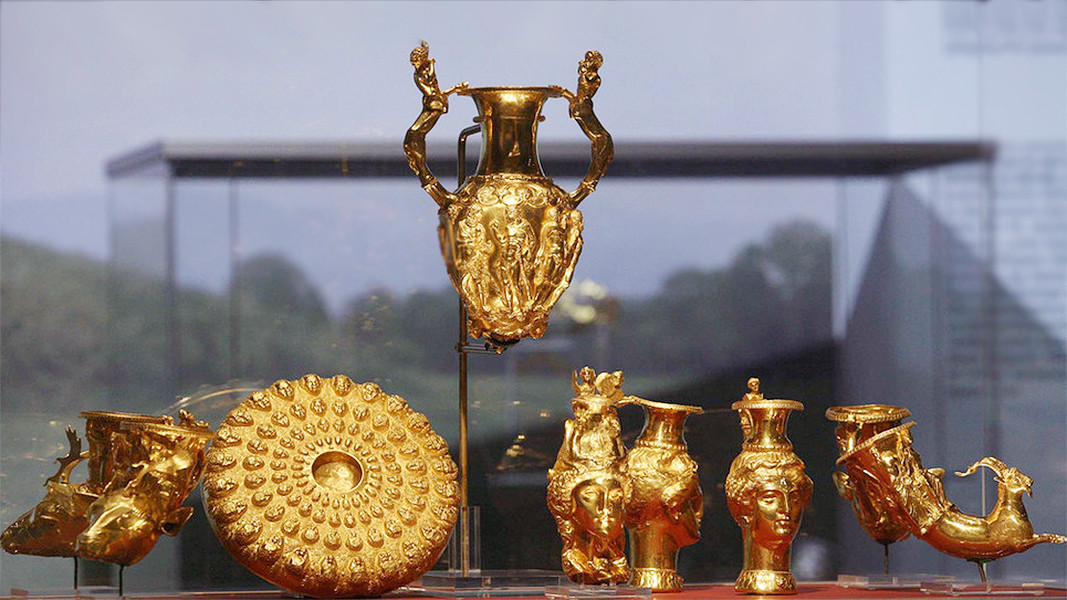
What happened in the first days after the discovery of the Panagyurishte Treasure?
On December 8, 1949, the Deikov brothers discovered the Panagyurishte Treasure while digging for clay at the local brick factory. Immediately after its discovery, it was handed over to the Regional People’s Council in Panagyurishte. The first days after the discovery of the Panagyurishte Treasure are crucial because they precisely determine the path along which this so remarkable story will unfold…
Initial measurements and the first document for the Panagyurishte Treasure
Petar Gorbanov, who worked as a museum curator in the town of Panagyurishte at that time, was the first to date the treasure to 400 B.C. and, with the participation of local goldsmiths, measured its total weight – about 7,500 grams. As a result, the first document was created, indicating the weight of the Panagyurishte Gold Treasure at the date of its discovery.
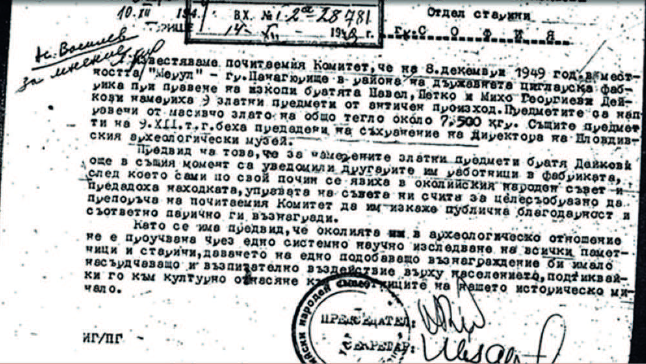
Figure 1.1 – The notice sent on 10.12.1949 by the Regional People’s Council – Panagyurishte to the Ministry – Department of Antiquities.
First public exhibition of the Panagyurishte Treasure
For a short period of time, the treasure was displayed in a wooden showcase in front of the old towel factory in the town center, guarded by a single policeman. It immediately became the object of great interest.
Interest in the Panagyurishte Treasure
On December 9, 1949, the regional governor of Plovdiv ordered that the treasure be transported to Plovdiv. Due to some underestimation of the importance of the find by the authorities, it departed by train without any guard or security measures. Later, the municipal administration of Panagyurishte sent a vehicle to catch up with the train so that guards could be placed on board, which occurred at Smilets station.
Official scientific research and recognition
After its arrival at the Plovdiv Archaeological Museum, the first scientific analyses and descriptions of the treasure began. Soon after, it was transferred to Sofia, where specialists from the National Archaeological Museum conducted thorough research. It was confirmed that the treasure is Thracian, dating from the 4th–3rd centuries B.C.
Monetary reward paid to the discoverers
The state paid the discoverers a monetary reward, which they shared among themselves. Today, the Panagyurishte Treasure is recognized as one of the most valuable Thracian treasures in the world and a symbol of Bulgarian cultural heritage.
Significance of the Panagyurishte Treasure
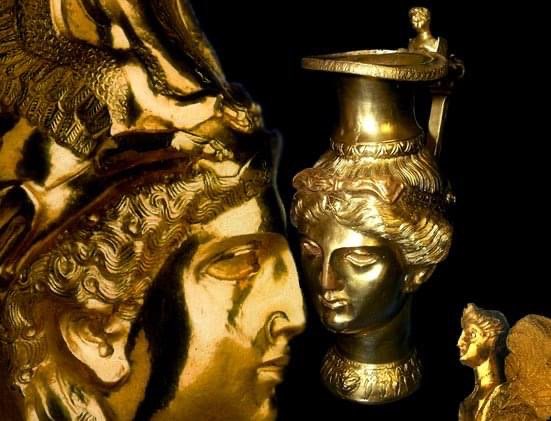
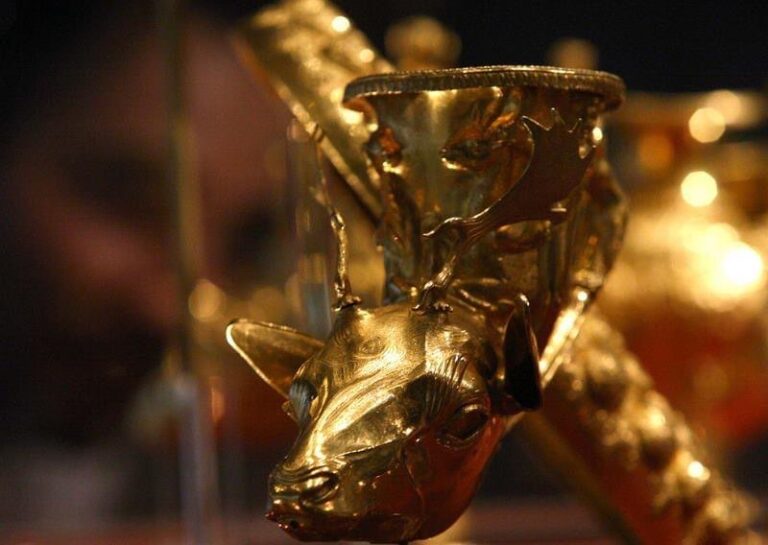
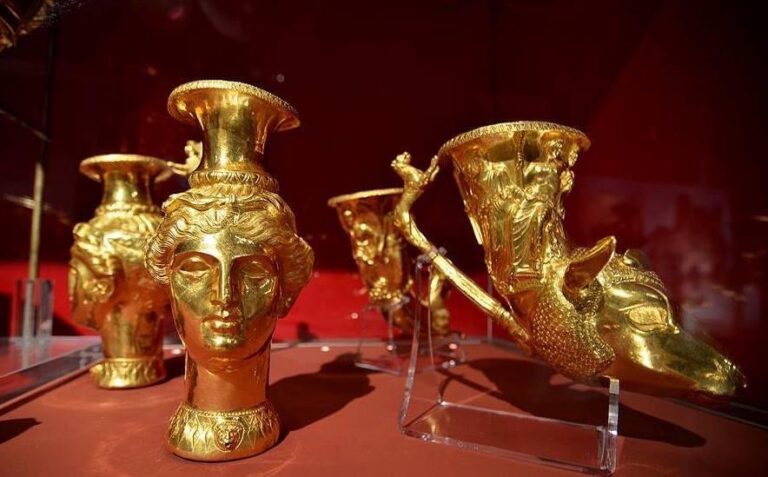
Today, the Panagyurishte Treasure is recognized as one of the most valuable Thracian treasures in the world and a symbol of Bulgarian cultural heritage. Made of pure gold, the Panagyurishte Treasure consists of nine vessels, distinguished by extremely rich decoration connected with Thracian culture.
It continues to generate enormous interest both among scholars and the general public. The Panagyurishte Treasure is a source of pride.
Media:
Author material – Dr. Pavel Tsvetankov
More: